Computer Controlled Expansion Processes of a Perfect Gas Unit
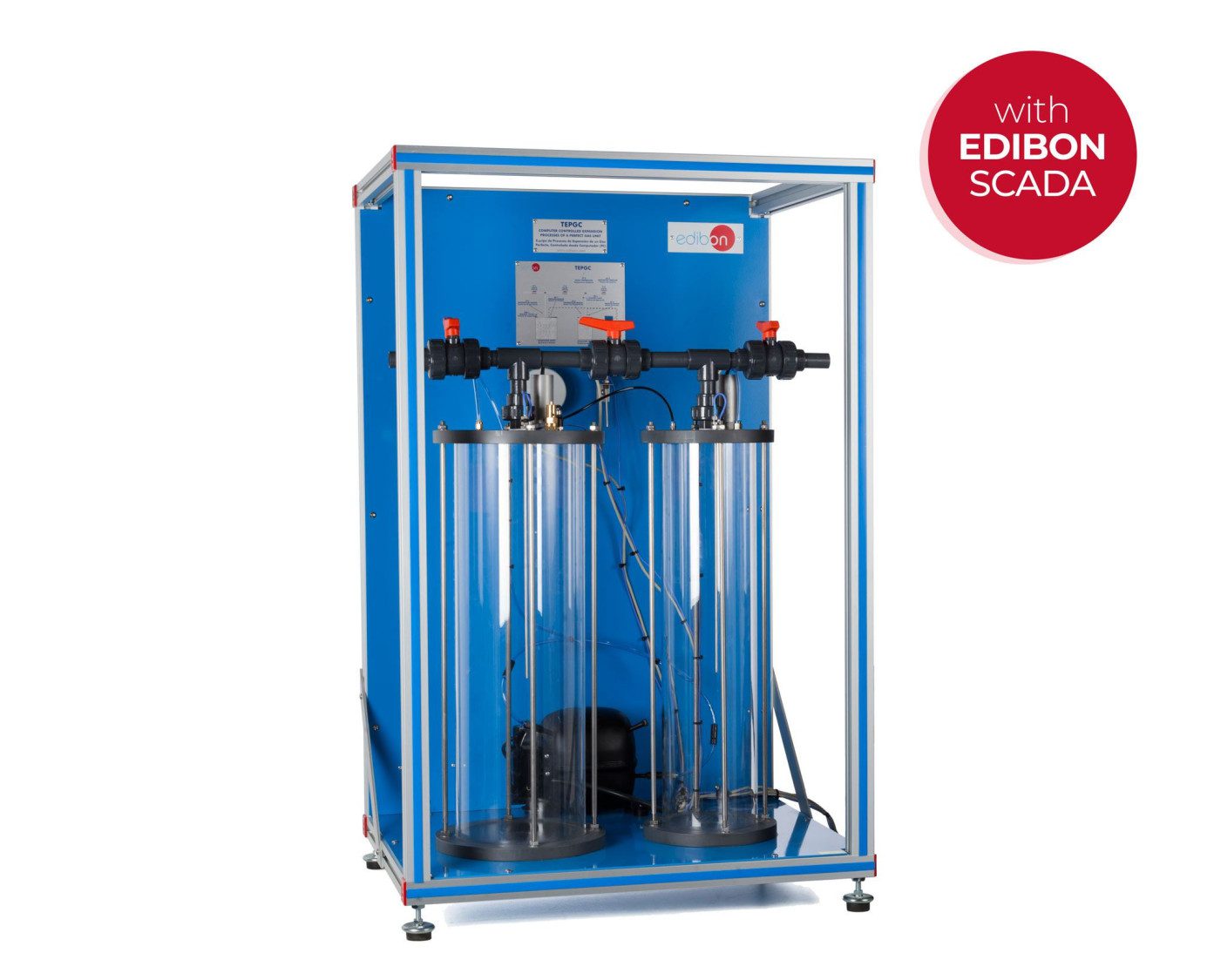
The EDIBON Computer Controlled Expansion Processes of a Perfect Gas Unit (TEPGC) is a hands-on training system designed to help students explore gas expansion, compression processes, and fundamental thermodynamic principles. Ideal for thermodynamics, mechanical engineering, chemical engineering, and higher education programs, the system demonstrates how changes in pressure, temperature, and volume influence gas behavior under different operating conditions.
Equipped with EDIBON’s SCADA control system, students can investigate rapid and gradual gas expansion, analyze energy relationships, and study the laws of thermodynamics through real-time measurements. Guided experiments provide practical experience in gas properties, energy transformations, and thermodynamic process analysis.
What’s Included
- TEPGC Gas Expansion and Compression Training Unit
- Pressurized and Vacuum Methacrylate Vessels
- Computer-Controlled Air Pump
- Quick-Acting and Needle Regulation Valves
- Pressure and Temperature Sensors
- Overpressure Safety Valve
- Interconnecting Pipes and Fittings
- Control Interface Box
- Data Acquisition Board
- EDIBON SCADA Control and Data Management Software
- Instructional Manuals and Guided Practical Exercises
Features
- Dual-Vessel Configuration: Features separate pressurized and vacuum vessels for studying different gas expansion and compression processes.
- Adjustable Expansion Rates: Quick-acting and needle regulation valves enable comparisons between rapid and gradual gas expansion.
- Computer-Controlled Air Pump: Regulates pressurization and vacuum conditions for experimental testing.
- Integrated Measurement System: Pressure and temperature sensors monitor conditions within both vessels and the surrounding environment.
- Thermodynamic Process Analysis: Supports investigations into isentropic, adiabatic, constant-volume, and polytropic processes.
- SCADA-Based Control: Provides computerized monitoring, parameter adjustments, and real-time data acquisition.